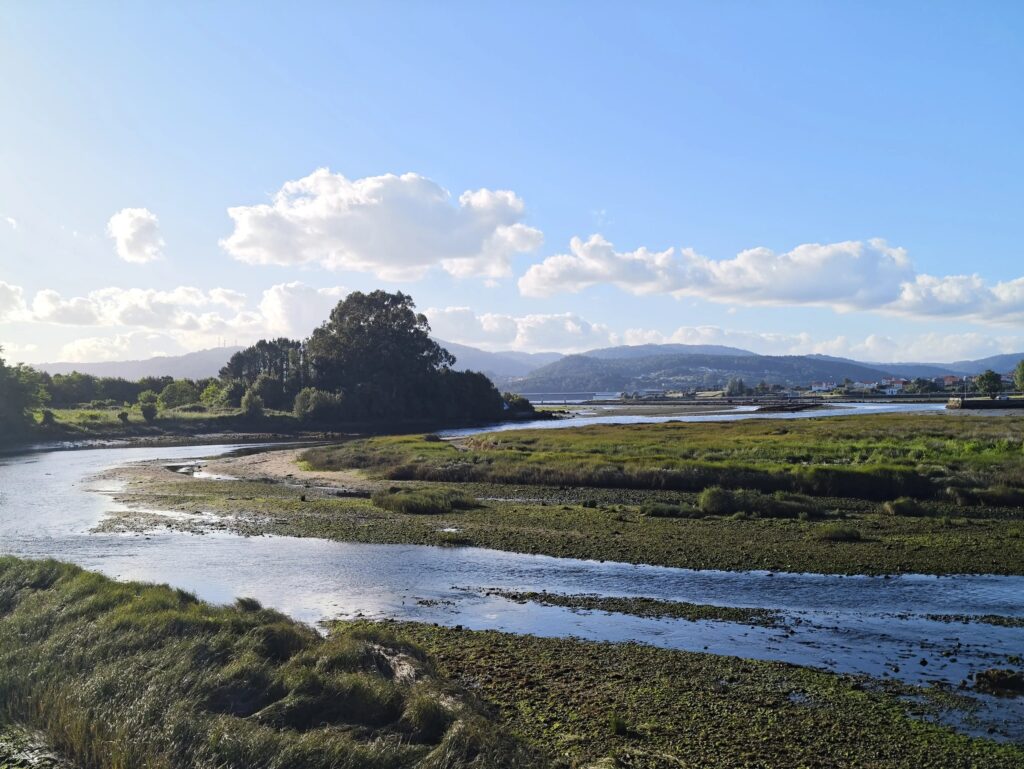
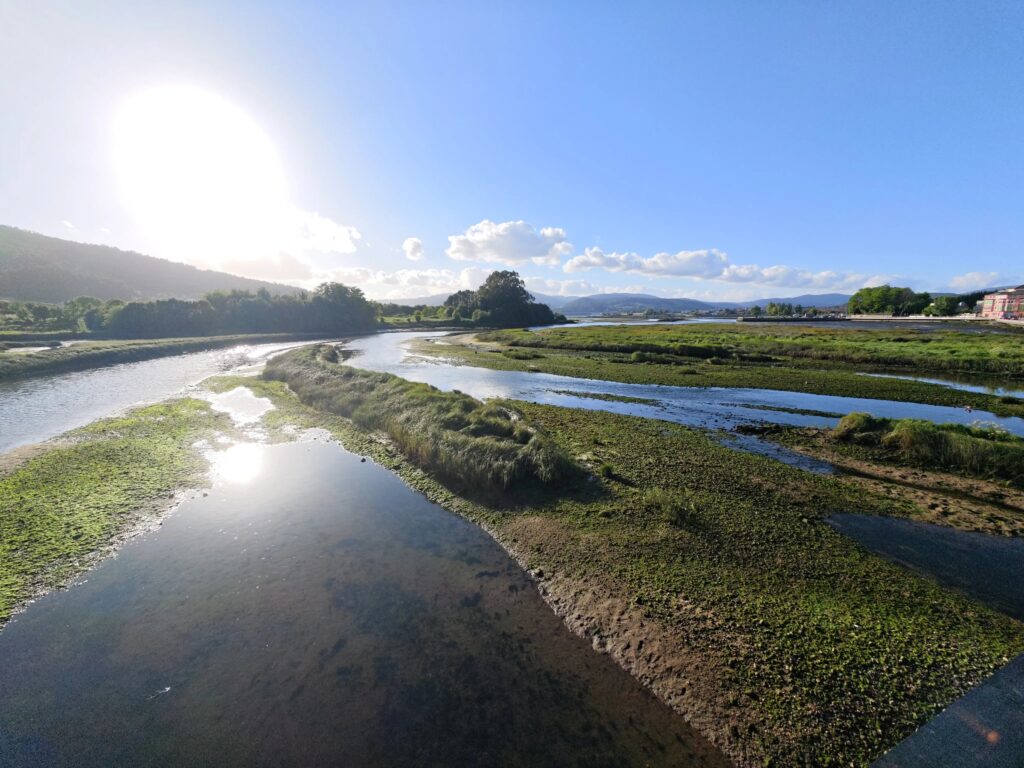
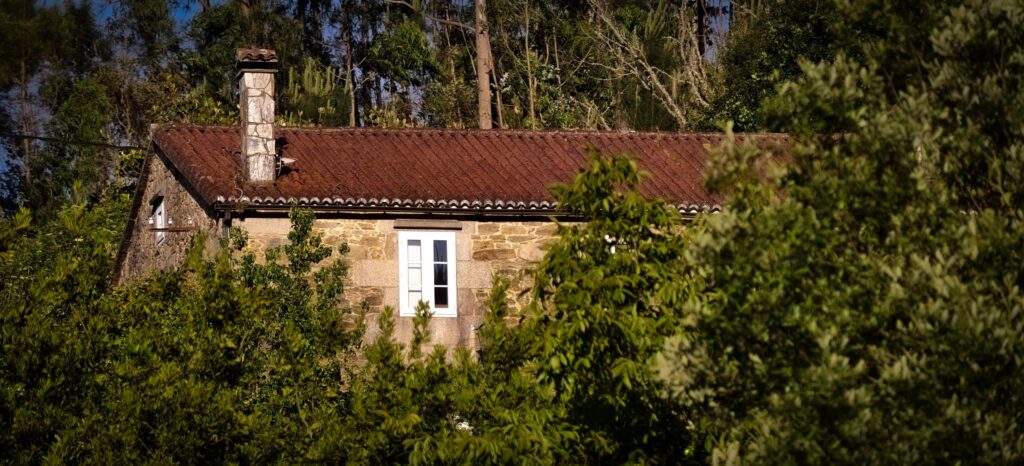
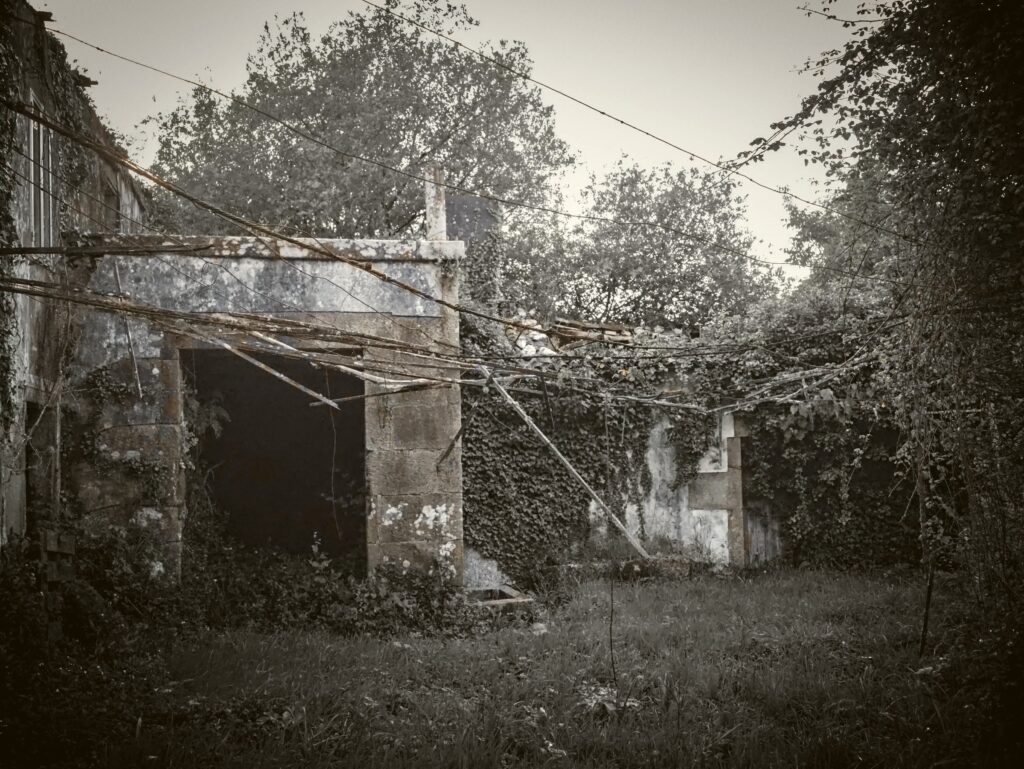
Argalo is a rural parish of Noia, near the inner end of the Ría de Muros e Noia, in A Coruña. Pines and eucalyptus on the slopes, granite houses and vegetable plots in between, and below them the ría, which empties and refills twice a day.
We went looking for the Fervenza de Argalo, a waterfall on the Vilaboa stream. At about seven metres, it is the highest in the municipality of Noia. The track to it is not signposted, and it is best seen after several days of rain. We did not find it. The waterfall remains, for now, a conjecture.
Instead, the path delivered us to the parish cemetery. In Spanish, cascada and cementerio at least share a first letter; that is where the similarity ends. In the middle of the cemetery stands the baroque church of Santa María de Argalo, which faces the opposite way to most churches: apse to the west, door to the east. So we were not the only ones pointing in an unexpected direction.
Close to the cemetery lies the Dolmen de Argalo, known locally as Cova da Moura: a Neolithic tomb of seven great slabs, around five thousand years old. If you miss the waterfall too, the consolation prize is older than most answers.
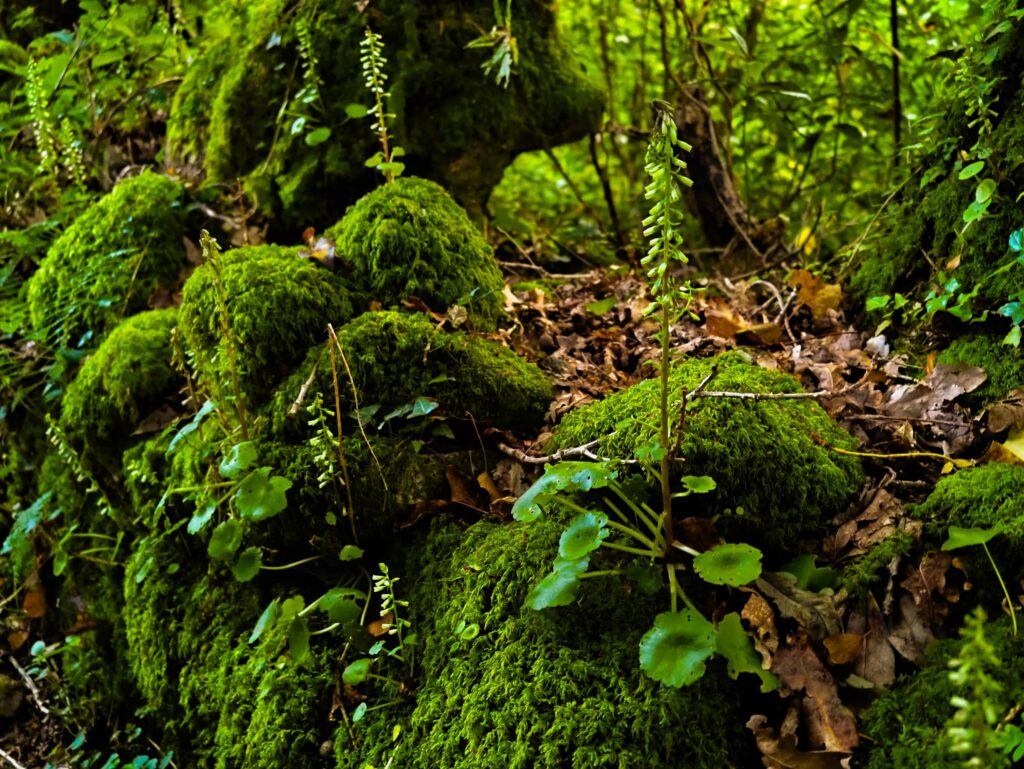
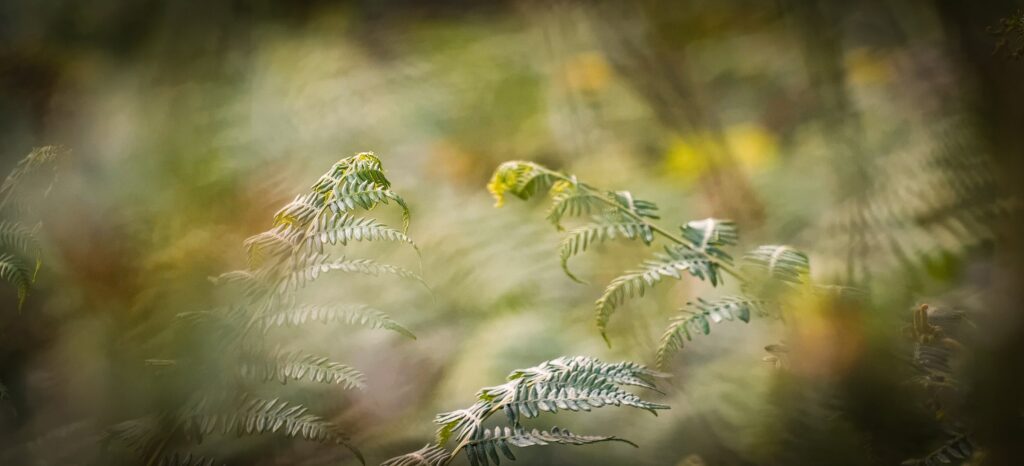
We walked here in May 2026. The frames follow the walk: the ría at low tide, a pine lane, moss and ferns, a serin on a wire, and a sunset over the ría to close the proof.
To find the waterfall, go after a rainy spell and load the route on your phone before you set off: there are no signs.