Praia da Rainha is one point on a very long line: the more than 15 kilometres of almost continuous sand of Costa da Caparica, on the Atlantic side of the Tagus estuary, across the river from Lisbon. It lies inside the Costa da Caparica Fossil Cliff Protected Landscape, which is a geologist's way of saying that the cliffs behind you remember when the sea was somewhere else.
The beach is a function of the tide. At low tide it grows, and shallow pools form along the shore that turn into mirrors at sunset. The practical variables: lifeguards in the summer months, a restaurant with a terrace over the dunes, a heliport for emergencies and, in summer, a stop of the Transpraia, the little train that runs along the Caparica beaches.
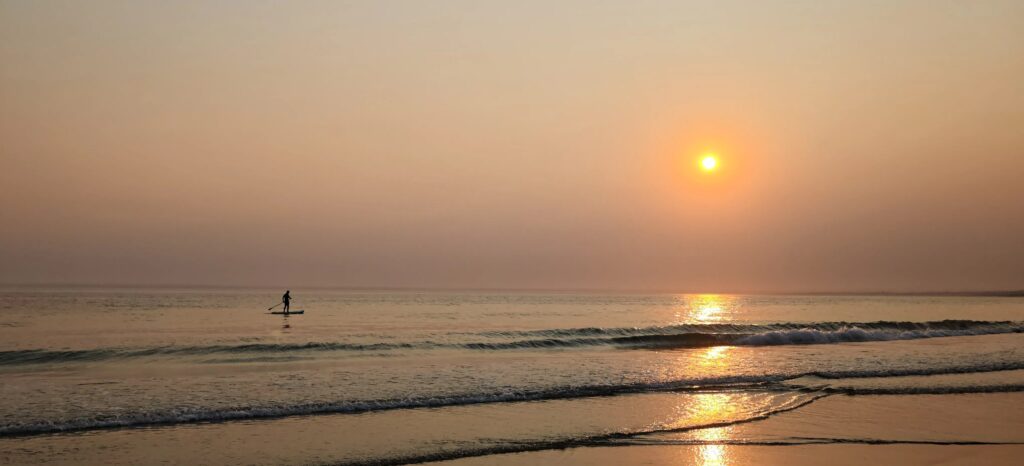
The beach faces west, so every evening the sun sets straight into the Atlantic, on schedule, no ticket required. To the north-west, on a sandbank at the mouth of the Tagus, stands the Bugio lighthouse: a fort begun in the late 16th century that still marks the way into Lisbon. On hazy days it appears and disappears like an unproven conjecture.
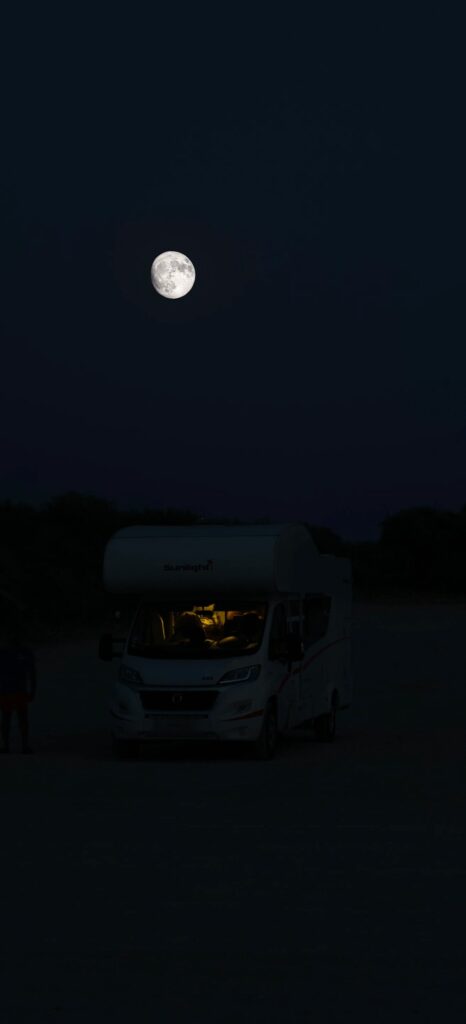
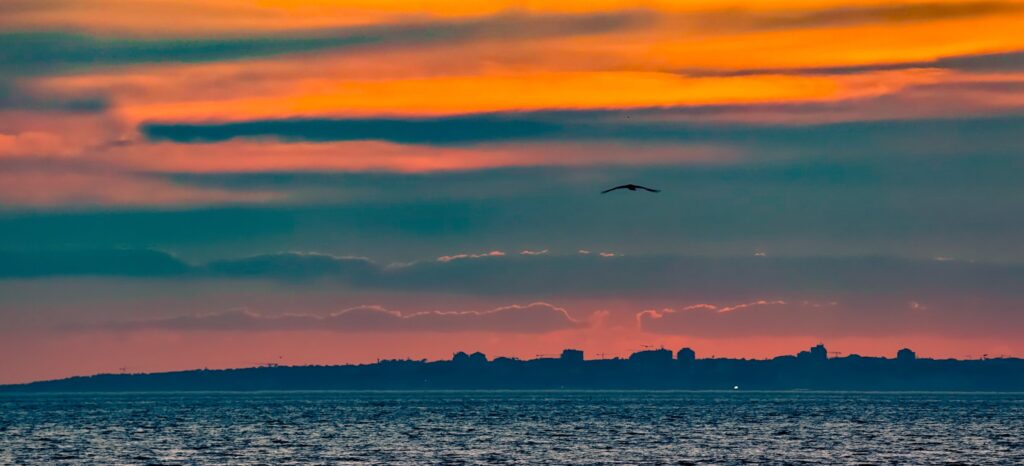
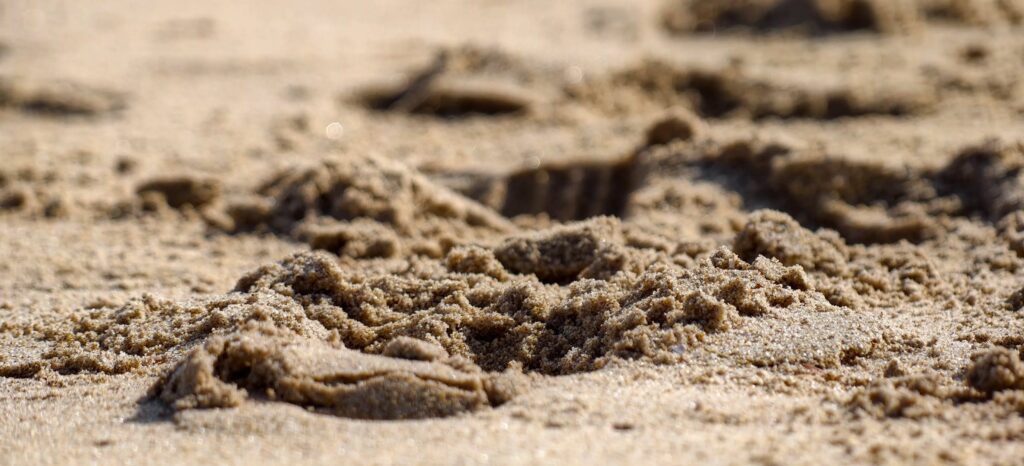
We spent the summer of 2026 here, with Area, our Sheltie, on sand-inspection duty. These frames are the result of many evenings on the same stretch of beach: paddle boarders crossing the sun, a full moon over a camper and the other bank lighting up after dark. Same place, different light, never the same photo twice.
In high season, arrive early: the car park fills up and is paid in summer. The sunset, however, is free.