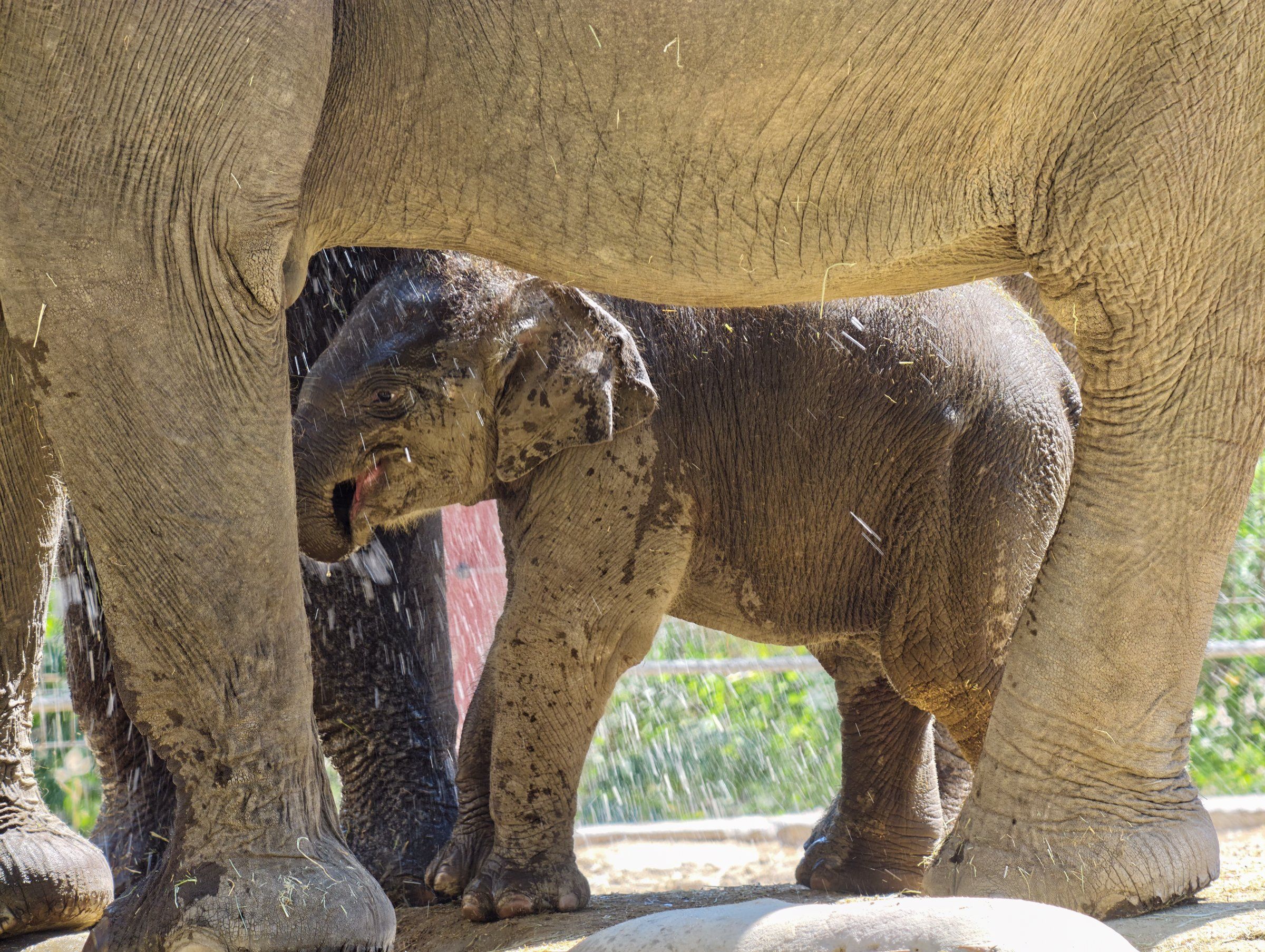
Statement. In early August 2026, a Sumatran elephant calf was born at the Zoo Aquarium de Madrid, the only centre in the EAZA European programme for this subspecies. We met him on 17 September 2026, at about six weeks old. His name is Max.
Proof by induction works like this: show that something holds for n, then show that n implies n + 1. Conservation programmes work the same way, one birth at a time. In August 2026, the Sumatran elephant herd in Madrid took its n + 1 step.
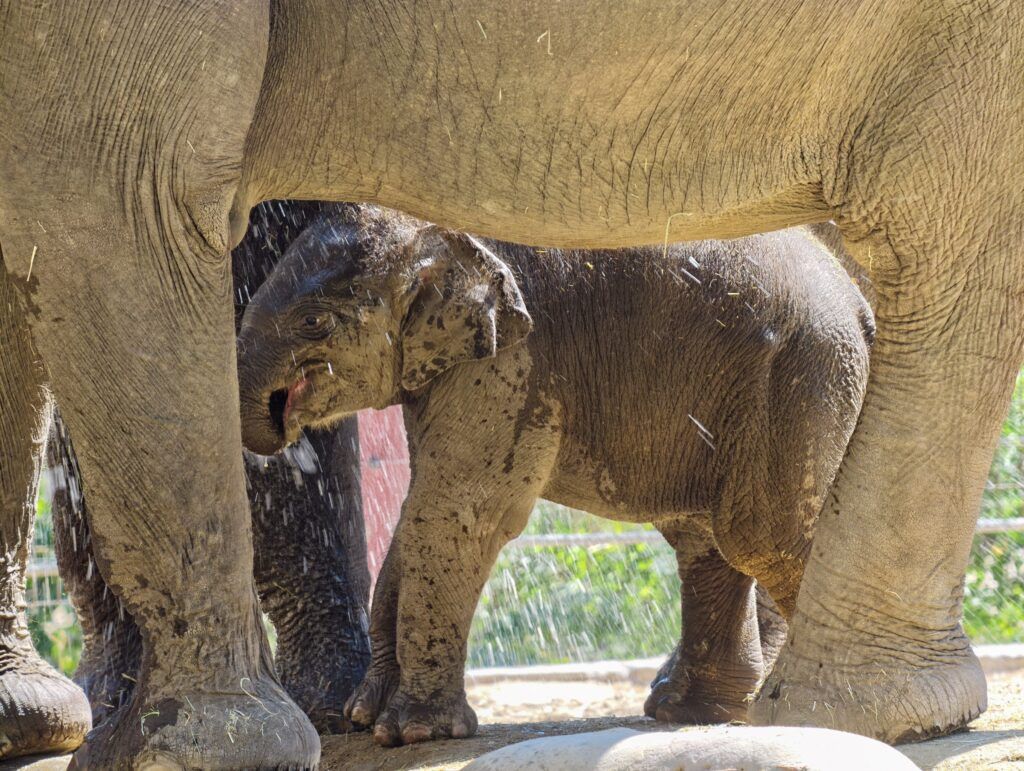
When was the elephant born at Zoo Madrid?
The zoo announced the birth on Thursday 6 August 2026. According to its statement, Cynthia’s first contractions began shortly after 2 p.m., and the calf was born about twenty minutes later. The other three females of the group stayed beside her, surrounding mother and newborn with their trunks while vocalising loudly, a typical social behaviour of the species. Around half an hour later, the calf stood up and took his first unsteady steps.
Press reports disagree on the weekday of the birth (Tuesday or Wednesday), so we will leave it as early August. The sure part is the gestation: about 21 months, one of the longest pregnancies of any mammal.
Why Sumatran elephants matter
The Sumatran elephant (Elephas maximus sumatranus) is the most threatened of the three Asian elephant subspecies and is listed as Critically Endangered by the IUCN. It has lost about 69% of its habitat in three decades to agricultural expansion, deforestation and the fragmentation of Indonesian rainforests. The IUCN puts the whole Asian elephant population at around 52,000, and the latest census cited in the press counts fewer than 2,800 Sumatran elephants in the wild.
Max’s parents, Cynthia and Valentino, arrived in Madrid from Tierpark Berlin as part of a family group, and both take part in the EAZA European breeding programme (EEP). Madrid holds the only European Sumatran elephants within that programme, so every calf here counts twice: once for the herd, once for the subspecies.
Our visit: fifteen frames and a few videos
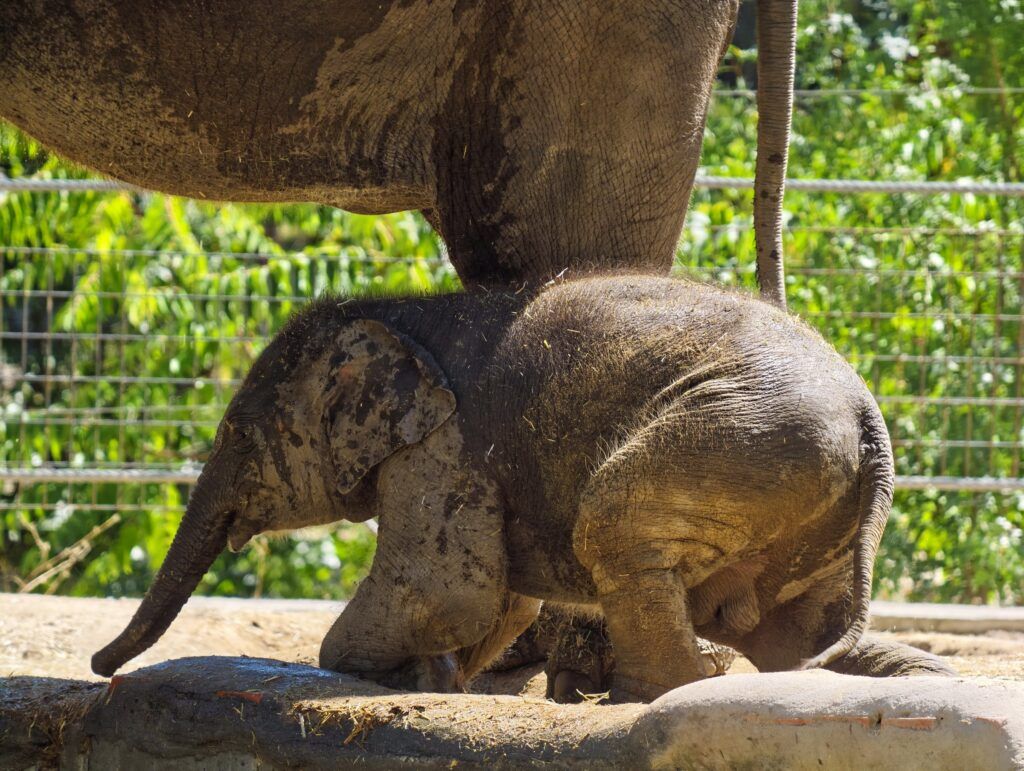
At the elephant enclosure on 17 September, Max walked under the adults, lay down in the dirt, covered himself in mud and tried his trunk in every direction. We came away with fifteen frames and a few videos; the best six are in this post.
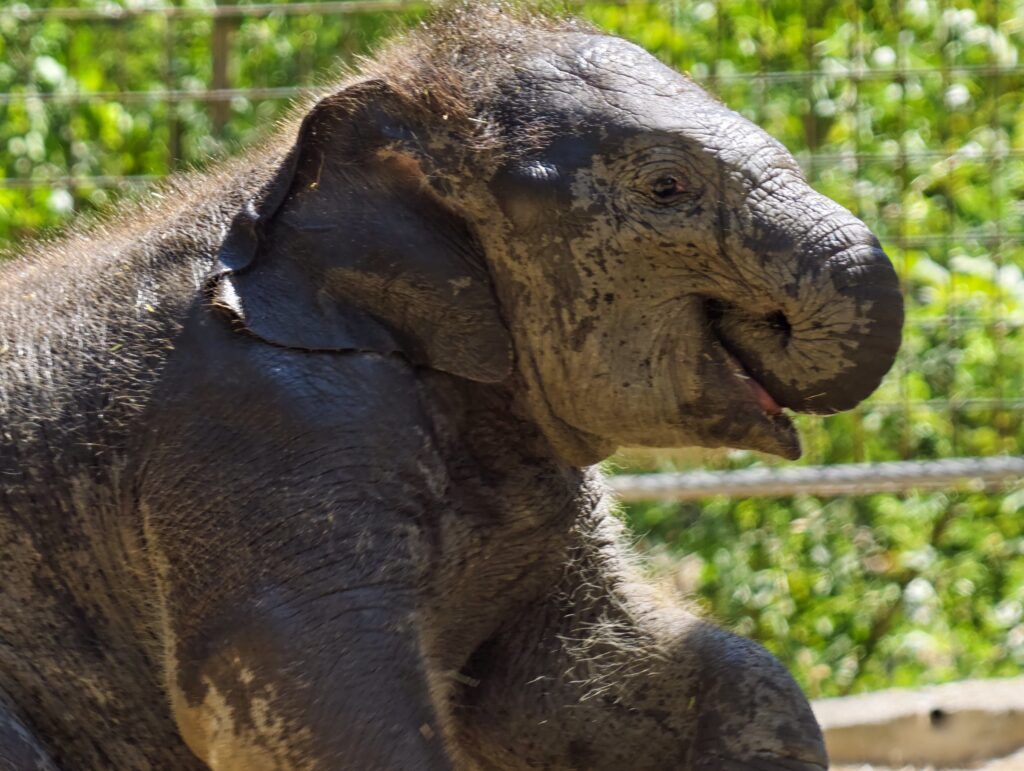
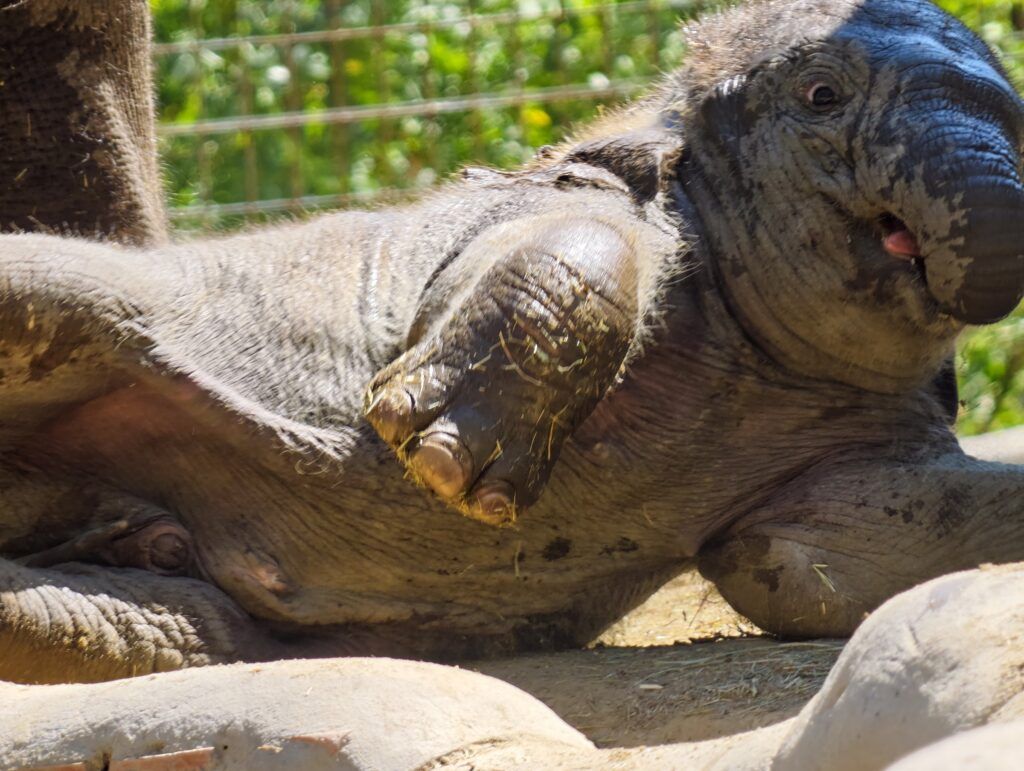
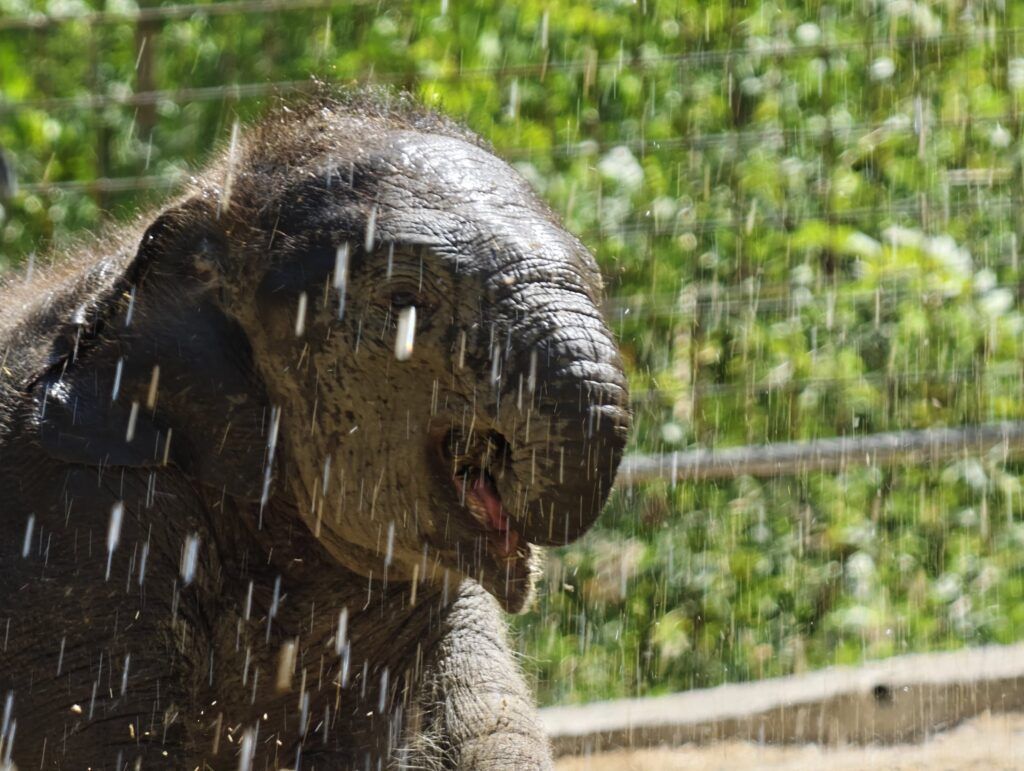
One number kept coming back while we watched him: 21 months of gestation against about six weeks of life outside. Roughly fifteen to one, and falling every day he grows.
An RNE contest and an elephant plush
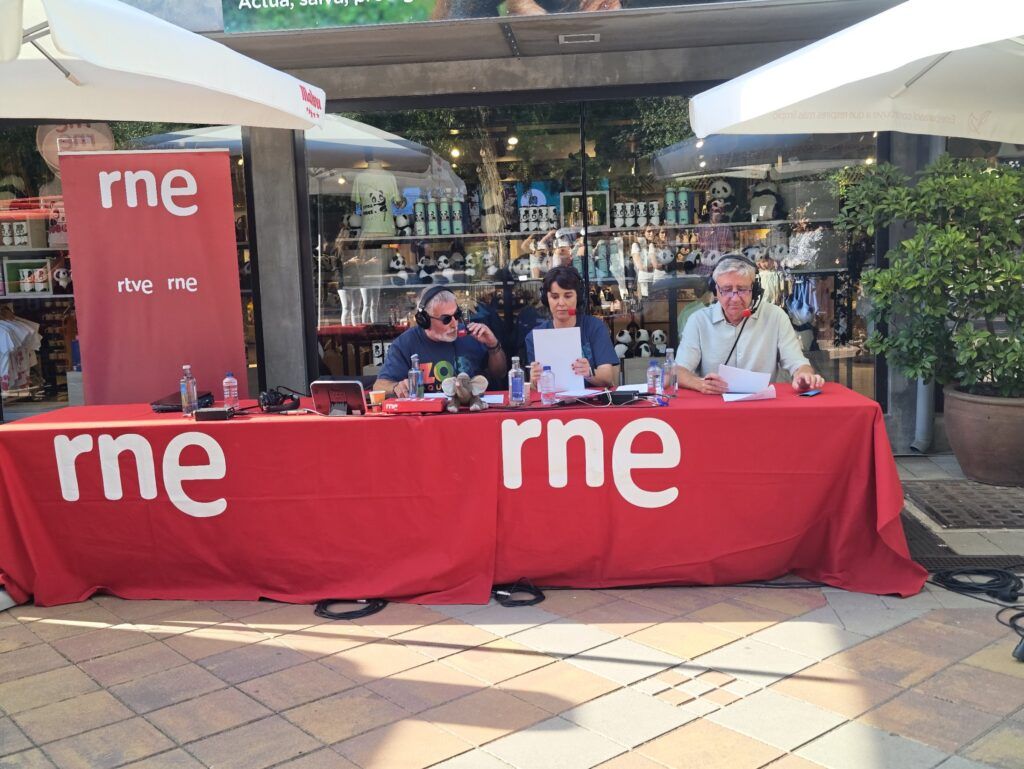
The contest was not part of the plan. That same day, RNE (Radio Nacional de España) was broadcasting live from the zoo itself; the team stopped us on the way out, and we decided to join their contest to welcome the calf. We won an elephant plush and other welcome gifts for Max. A good exit for an afternoon that was already a good proof.
Tips for photographing an elephant calf
- Keep an adult in the frame. Without a leg or a belly for scale, a calf just looks like a small elephant.
- Use a fast shutter speed. Calves move in bursts, and the trunk blurs first.
- Focus on the eye. At full resolution, the eye decides whether the frame is sharp.
- Shoot in bursts and choose later. Our sharpest walking frame came one second after a softer one.
- Be patient. In August, the zoo said it would put the calf’s welfare and his bond with the group first before deciding when he could be seen outside. His visibility depends on his rest and adaptation, not on our schedule.
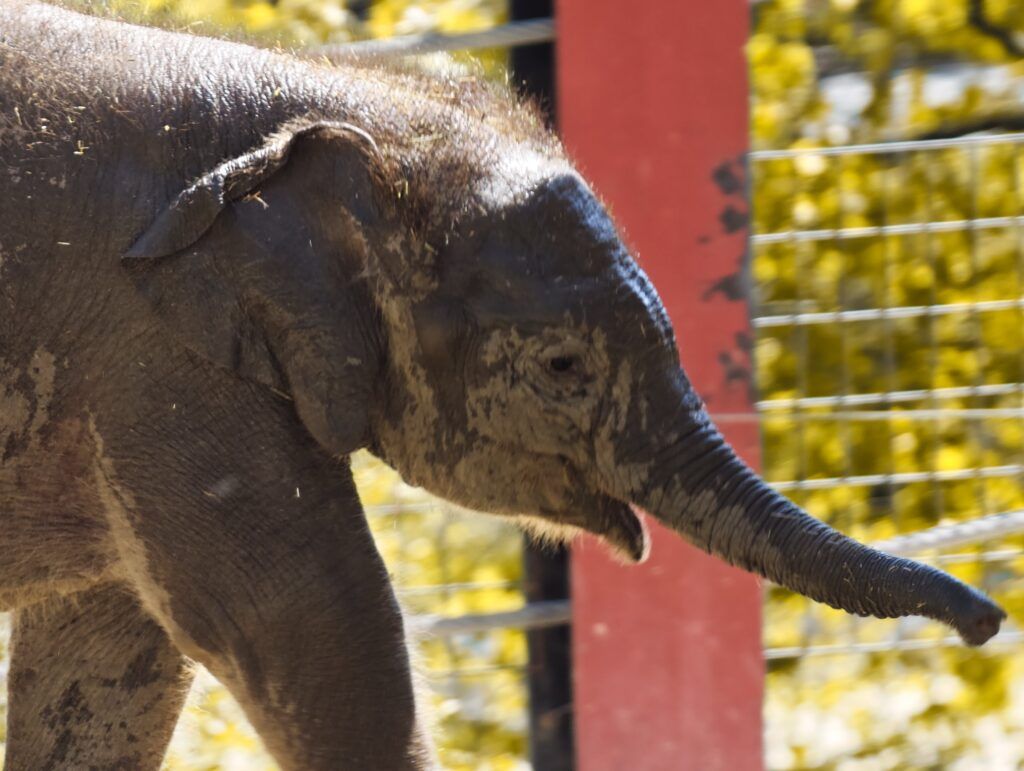
Every frame from the day, from the flamingos to the jellyfish, is in the Zoo Aquarium de Madrid proof. Max is at the end, where a result belongs.
Frequently asked questions
When was the Sumatran elephant calf born at Zoo Madrid?
In early August 2026. The Zoo Aquarium de Madrid announced the birth on Thursday 6 August; press reports differ on the exact weekday.
Who are Max’s parents?
Cynthia and Valentino, two Sumatran elephants that came to Madrid from Tierpark Berlin and take part in the EAZA European breeding programme (EEP).
Why is the Sumatran elephant endangered?
The IUCN lists it as Critically Endangered. It has lost about 69% of its habitat in three decades to agricultural expansion, deforestation and forest fragmentation in Indonesia.
Can you see the elephant calf at Zoo Madrid?
We saw him outdoors with the herd on 17 September 2026. His visibility depends on his rest and adaptation, so check with the zoo before you go.